Tea Origins · 4 min read
Dimbula
A western district defined by its quality season — the dry, cold weeks after the monsoon.
- Elevation
- 1,100–1,600 m
- Climate
- Cool, wet monsoon months followed by dry, bright weather.
- In the cup
- Clean and mellow with a refreshing edge. Golden liquor and a rounded finish.
A district with a season
Dimbula lies on the western slopes, which puts it directly in the path of the south-west monsoon. From roughly May to September it is wet. Then the rain stops, the air turns cold and dry, and the district enters what the trade calls its quality season.
Those few dry weeks are when Dimbula makes its reputation. Cold nights and dry days stress the bush just enough to sharpen the leaf, and teas picked in that window are noticeably brighter and cleaner than the same bushes give in the wet.
The middle ground
Sitting between the very high districts and the low country, Dimbula tends to be the most balanced Ceylon in the cup. It has more body than Nuwara Eliya and more delicacy than a low-grown, which makes it the easiest of the regions to drink without thinking about it.
It is also the most forgiving to brew. A minute either side of the recommended steep will not ruin it, and it takes a little milk without collapsing.
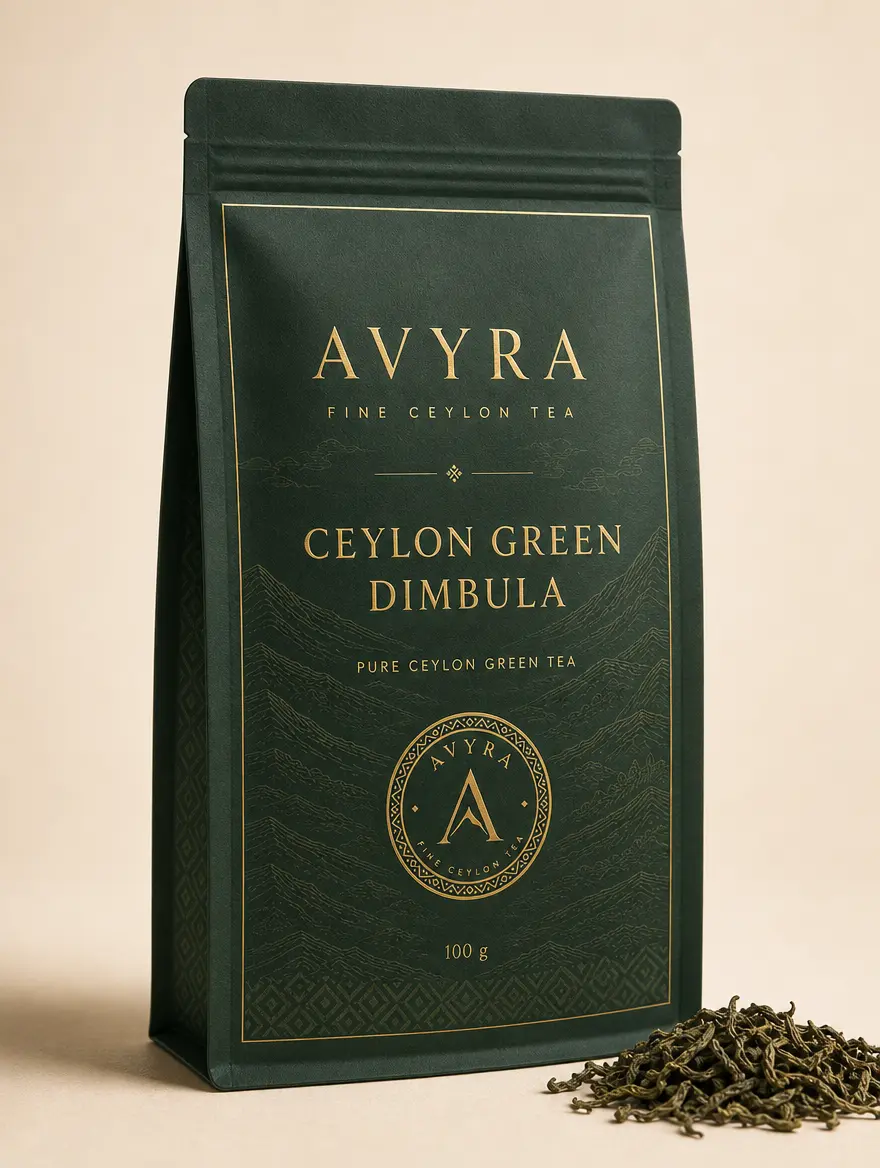
Green from the same slopes
Dimbula is not only a black tea district. The same leaf, pan-fired instead of oxidised, gives a clean green tea with a mineral edge that reflects where it grew. Our gunpowder and Young Hyson grades come from this elevation band.